
Ultimate Career Growth: Enrolling in the Best PLC Programming Course in Mohali
In today’s fast-paced industrial landscape, automation is no longer just an optional upgrade; it is the heartbeat of modern manufacturing, warehousing, and energy sectors. From assembly lines to complex chemical plants, Programmable Logic Controllers (PLCs) direct the flow of machinery with precision and speed. If you are a university student aiming to step into core engineering fields or an industry professional looking to future-proof your career, mastering industrial automation is a game-changer. For aspirants in the region, finding the right training ground is crucial. Selecting the Best PLC Programming Course in Mohali opens doors to lucrative global career opportunities, bridging the gap between academic theory and high-tech industrial floors.
This comprehensive exploration dives deep into what makes a top-tier PLC Programming Course, why industrial automation is booming, and how cutting-edge technical training equips you with the exact competencies top employers demand.

The Evolution and Importance of Industrial Automation
Industrial automation has transformed significantly over the past few decades. Gone are the days of manual relay panels that required hours of troubleshooting and rewiring whenever a production logic changed. Today, modern industrial plants rely heavily on digital logic controllers that process inputs from sensors and execute precise control over motors, valves, and actuators.
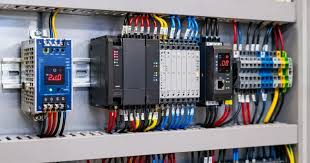
Why Automation Drives Modern Industries
- Unmatched Precision: Automated systems eliminate human error, ensuring uniform product quality across millions of manufacturing cycles.
- Enhanced Safety: Hazardous environments, such as high-temperature furnaces or chemical processing units, are managed safely through remote PLC oversight.
- Operational Efficiency: Minimized downtime and rapid diagnostics keep production lines running at peak capacity.
- Data-Driven Insights: Modern control systems interface seamlessly with broader networks, feeding vital telemetry data to enterprise dashboards.
Understanding Programmable Logic Controllers (PLCs)
At the heart of every automated facility lies the PLC. Designed for rugged industrial environments, these specialized computing systems withstand extreme temperatures, vibrations, and electrical noise.
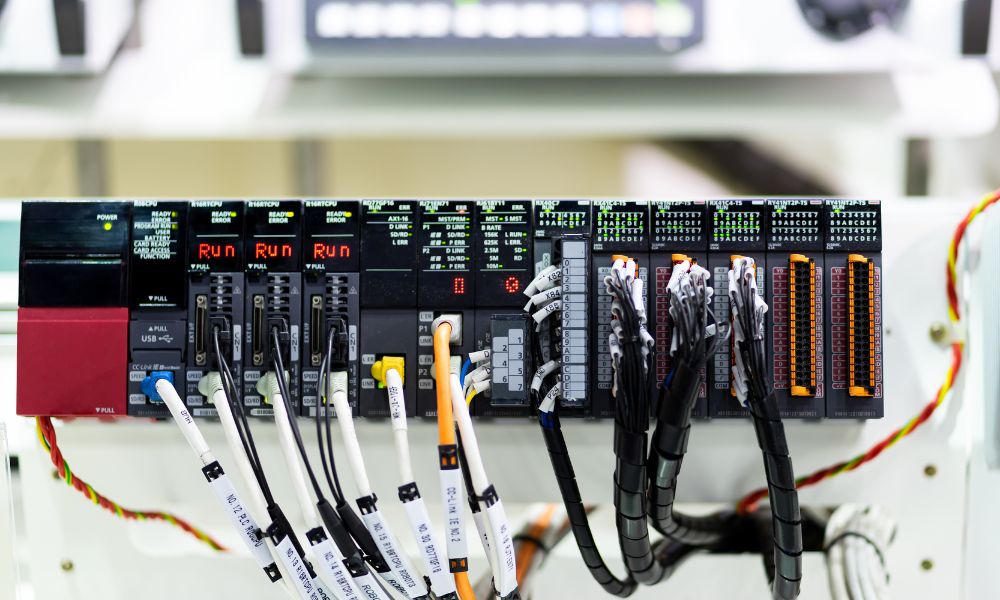
Core Components of a PLC System
- Central Processing Unit (CPU): The brain that executes the control program, evaluates input states, and updates output signals.
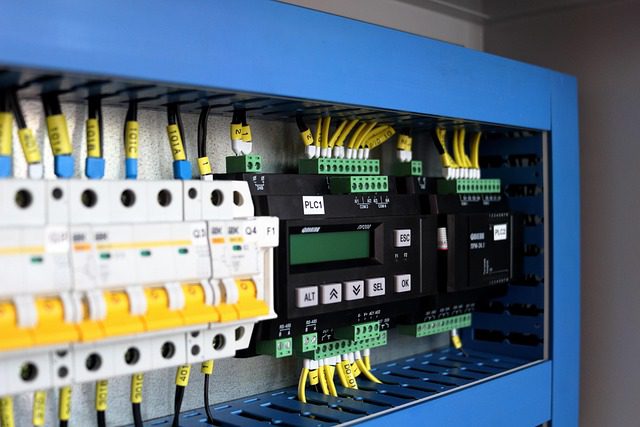
- Input/Output (I/O) Modules: The physical interface connecting field devices like push buttons, limit switches, and solenoid valves to the CPU.
- Power Supply Unit: Converts incoming AC or DC power into the stable low-voltage DC required by the processor and internal circuits.
- Programming Device: A computer running specialized software used to write, upload, and debug control logic.
Core Pillars of a Comprehensive PLC Programming Course
When searching for the Best PLC Programming Course in Mohali, it is essential to examine the curriculum depth. A world-class training program goes beyond basic hardware wiring, diving deep into software logic, industrial communication protocols, and troubleshooting methodologies.
Essential Learning Modules
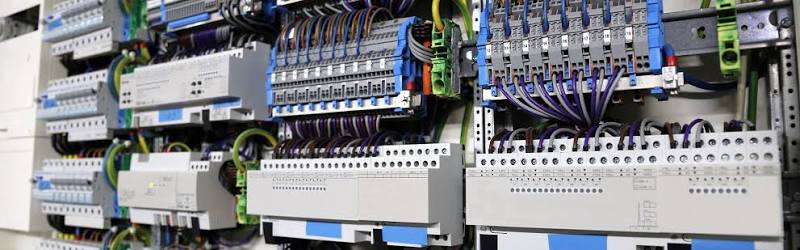
- Introduction to Industrial Hardware: Understanding discrete vs. analog signals, sinking and sourcing concepts, and wiring configurations.
- Ladder Logic Fundamentals: Mastering the most widely used graphical programming language designed to mimic traditional relay wiring diagrams.
- Timers and Counters: Implementing delay-off, delay-on, retentive timers, and event counters for sequential control tasks.
- Advanced Instructions: Utilizing data manipulation, arithmetic operations, comparison blocks, and shift registers.
- Human-Machine Interface (HMI) Integration: Designing intuitive operator screens for real-time monitoring, alarm logging, and parameter adjustments.
- Industrial Communication Networks: Exploring how controllers talk to each other and field instruments using standard industrial communication frameworks.
The Core Systems: Empowering Engineers Through Advanced Technology Training
At The Core Systems, we pride ourselves on being a premier Software Development and AI-driven organization located in the vibrant Chandigarh and Mohali region. Our mission is to bridge the widening chasm between traditional academic curricula and the rapid demands of the modern tech and industrial ecosystem.
While our expertise spans artificial intelligence, data science, full-stack web development (MERN and Python with AI), IoT, IIoT, data analytics, embedded systems, Python, AWS cloud computing, cybersecurity, and Linux, our industrial automation and PLC training programs remain a cornerstone for hardware and control engineers. We actively develop corporate and industrial projects across Chandigarh, Mohali, Punjab, Haryana, and nearby areas, ensuring our trainees learn from real-world deployments rather than textbook theories alone.
Ladder Logic and Beyond: Programming Paradigms
While Ladder Logic remains the undisputed king of factory floors due to its intuitive, electrician-friendly visual structure, modern industrial applications demand versatility. A robust PLC Programming Course introduces students to multiple programming languages defined under international standards.
- Ladder Diagram (LD): Features graphical relay-style logic representation and is primarily used for general discrete manufacturing and sequential control.
- Structured Text (ST): A high-level textual language similar to Pascal or C, designed for complex mathematical algorithms and data processing.
- Function Block Diagram (FBD): Utilizes graphical blocks interconnected for signal flow, making it ideal for continuous process control and loop management.
- Instruction List (IL): A low-level assembly-style textual language utilized for high-speed, memory-efficient micro-operations.
Bridging PLCs with IoT and Industrial Automation (IIoT)
The industrial landscape is undergoing a massive paradigm shift known as Industry 4.0. Traditional isolated factory automation is rapidly evolving into interconnected ecosystems where data flows seamlessly from the factory floor to cloud servers.
The Role of IIoT in Modern Control Systems
- Remote Monitoring: Engineers can check machine health and production metrics from anywhere in the world.
- Predictive Maintenance: Analyzing continuous sensor streams allows maintenance teams to fix failing components before unexpected breakdowns occur.
- Cloud Analytics: Integrating PLC data with powerful cloud platforms enables deep data analytics and machine learning optimization.
Career Opportunities After Completing a PLC Programming Course
Completing a rigorous PLC Programming Course unlocks a multitude of high-paying career pathways across diverse industrial sectors. Manufacturing plants, automotive manufacturing hubs, pharmaceutical laboratories, water treatment facilities, and energy grids constantly seek certified automation professionals.
Prominent Job Roles
- Automation Engineer: Designing, programming, simulating, and testing automated machinery and industrial processes.
- PLC Programmer / Developer: Writing clean, efficient control logic and deploying software updates to factory controllers.
- Control Systems Integrator: Merging disparate hardware and software sub-systems into a cohesive, streamlined operational network.
- Maintenance & Troubleshooting Specialist: Diagnosing complex electrical and logical faults on live factory floors to minimize downtime.
Why Local Training Matters in the Chandigarh-Mohali Region
The Chandigarh-Mohali technology and industrial corridor has emerged as a powerhouse for both software development and light-to-medium manufacturing industries. Enrolling in a local program provides distinct regional advantages.
Local Industry Synergy
- Proximity to Industrial Hubs: Easy access to industrial zones in Mohali, Dera Bassi, Baddi, and Ludhiana for industrial visits and live project exposure.
- Direct Placement Networks: Strong ties with regional manufacturing units, system integrators, and engineering firms looking for local talent.
- Mentorship by Industry Veterans: Learning directly from professionals who actively consult on regional industrial automation projects.
Essential Soft Skills for Automation Engineers
While technical expertise in writing logic and wiring hardware is non-negotiable, a successful automation engineer must also possess key soft skills.
- Analytical Problem Solving: The ability to trace a complex fault backward from a stalled actuator through relays and input modules to the exact line of code causing the issue.
- Cross-Disciplinary Communication: Bridging the gap between electrical technicians, mechanical designers, and high-level software database administrators.
- Safety Consciousness: Maintaining strict adherence to industrial safety protocols, lockout/tagout (LOTO) procedures, and emergency stop validations.
Real-World Applications of Programmable Logic Controllers
To truly appreciate the value of a comprehensive training program, examining where these systems operate daily is illuminating.
Key Industrial Sectors
- Automotive Assembly: Controlling multi-axis robotic welding arms, conveyor belts, and precision paint booths.
- Food and Beverage Packaging: Managing high-speed bottling, sorting, sealing, and labeling lines with exact volume control.
- Water Treatment Plants: Regulating chemical dosing pumps, filtration cycles, and high-capacity intake valves.
- Material Handling & Warehousing: Directing automated guided vehicles (AGVs) and high-bay robotic storage cranes.
Choosing the Right Learning Path
Selecting an educational program requires careful consideration of course structure, hands-on lab availability, and instructor expertise. Avoid programs that rely solely on simulator software without offering exposure to actual physical hardware panels.
Checklist for Aspiring Students
- Hands-On Lab Infrastructure: Does the institution provide physical access to industrial controllers, wiring boards, and input simulators?
- Project-Based Curriculum: Will you build complete automation projects from scratch, including HMI screens and sensor loops?
- Placement Assistance: Does the training provider offer dedicated resume reviews, mock technical interviews, and direct employer connections?
The Future Landscape of Industrial Control
As artificial intelligence and machine learning weave their way deeper into industrial hardware, the definition of a PLC programmer is expanding. Future automation engineers will not only write traditional control loops but also deploy edge-AI algorithms directly onto industrial gateways. Staying ahead of this curve requires continuous learning and a strong foundational grasp of core control principles. For those ready to step into this high-demand career, enrolling in a structured, industry-aligned curriculum is the definitive first step.
What is the primary objective of taking a PLC Programming Course?
Do I need prior coding experience to learn PLC programming?
How does mastering PLC programming benefit mechanical or electrical engineering graduates?
What career support is provided after completing training?
Can working professionals attend these training programs?

 WhatsApp us
